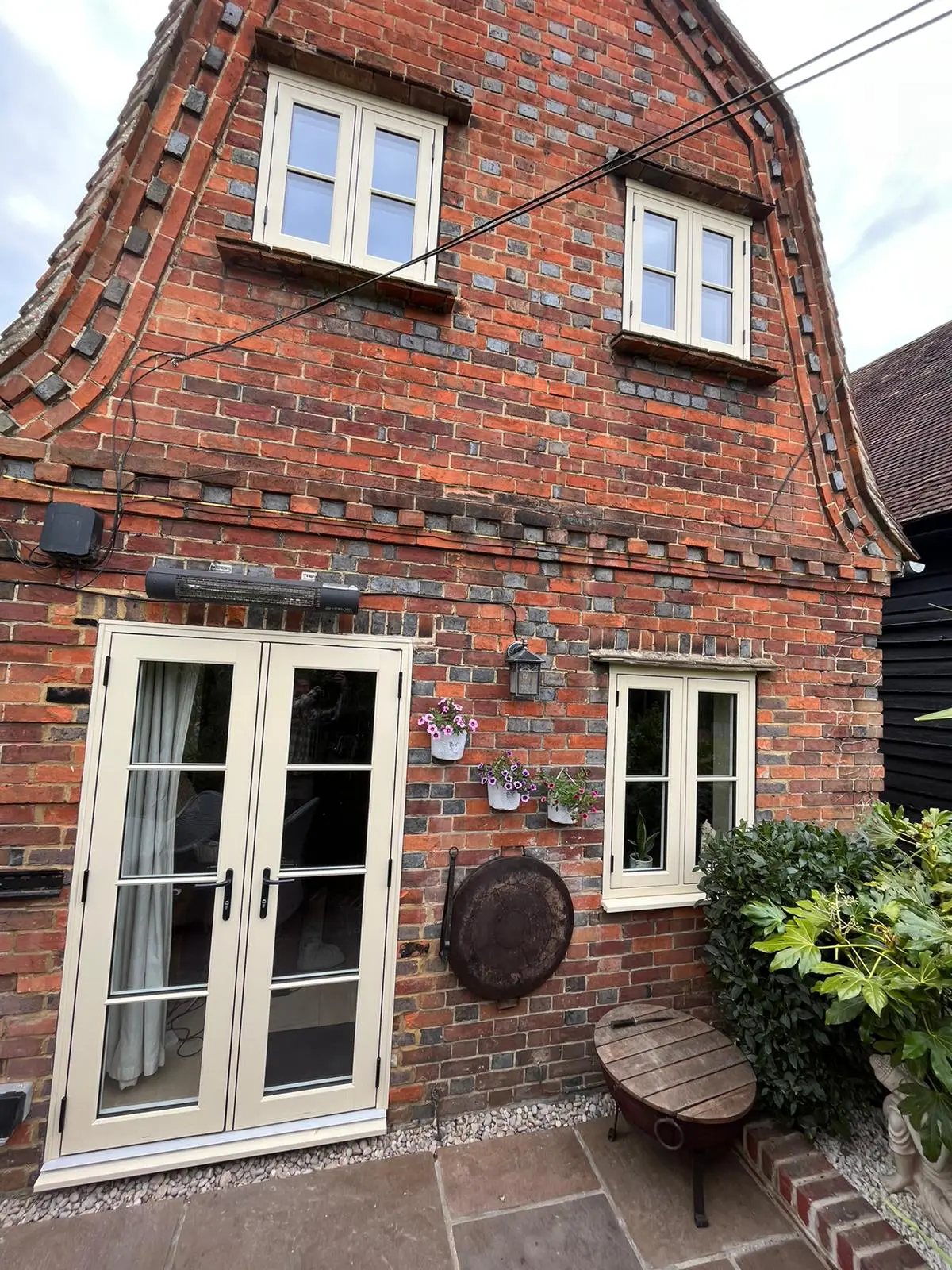
If you’ve been looking at new windows or doors recently, you may have noticed reeded glass popping up more and more.
And we can see why.
With its distinctive vertical lines and softly obscured finish, reeded glass sits somewhere between clear glass and fully private glazing. It lets plenty of light through while making it much harder to see straight through — which can be particularly handy when you want privacy without turning a room into a cave.
It also happens to look rather lovely.
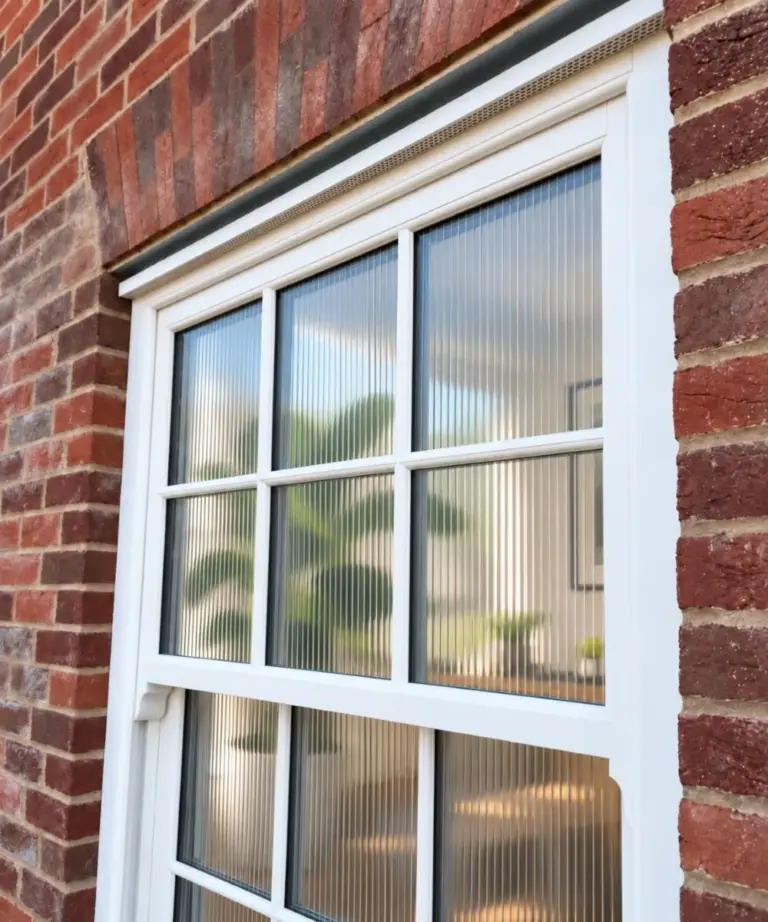
What is reeded glass?
Reeded glass is a type of textured glass with raised vertical lines running across its surface. Depending on the particular glass and how it is used, the texture can be more or less pronounced, but the basic idea is the same: you get light coming through while the view is softened and distorted.
Textured and decorative glass has been used in homes for a very long time, and reeded glass has that slightly traditional feel that means it can work beautifully in older properties. At the same time, its clean vertical lines also lend themselves surprisingly well to contemporary homes.
So it isn’t really a case of old house = reeded glass, modern house = something else. It can work in both.
Reeded glass vs satin glass: what’s the difference?
Satin glass has long been one of the most popular choices when homeowners want privacy. It’s smooth to the touch and has a soft, frosted appearance, making it a fairly understated option for bathrooms, front doors and other areas where you don’t want a clear view.
Reeded glass does something slightly different.
Rather than creating a uniformly frosted surface, its vertical texture creates a more directional, patterned look. You still get privacy, but with a bit more visual interest and character.
Neither is necessarily better — it really comes down to the look you’re after.
If you want something simple and discreet, satin glass may be just the ticket. If you’d like your glazing to bring a little more texture and detail to the window or door, reeded glass is worth considering.
And if you’re replacing windows or choosing a new door, it’s nice to have more than one option.
Why use reeded glass?
Privacy is probably the biggest reason homeowners choose reeded glass.
Think about the parts of your home where you want natural light but don’t necessarily want passers-by, neighbours or visitors seeing straight in.
A bathroom window is an obvious example. A hallway, cloakroom, side window or front door can also be a good candidate.
Reeded glass gives you a useful middle ground. You aren’t shutting out daylight with a blind or curtain, but you aren’t left with a completely clear view either.
And then there’s the appearance.
The texture adds another little layer of detail to a window or door. It’s subtle enough not to dominate, but can make a fairly simple piece of glazing feel much more considered.
Reeded glass in front doors
Reeded glass can be particularly effective in a front door.
Your entrance is one of the first things people see when they arrive at your home, so choosing something a little different from plain clear glazing can make a noticeable difference.
It can also solve a very practical problem: privacy.
A clear glass panel in a front door can give you a lovely view of the outside world — and give the outside world a lovely view straight back into your hallway.
Reeded glass softens that view while still allowing light into the entrance.
It can work particularly well in a composite door, where the glass becomes part of the overall combination of colour, style and hardware. For example, if you’re choosing a Solidor door, the glazing is another opportunity to get the balance between how your door looks from the outside and how it works for you day to day.
We now offer reeded glass for selected windows too
Reeded glass isn’t just something we’re offering as a glazing option for doors.
We’ve now added it to our sliding sash windows, as well as a selection of our uPVC windows.
This opens up some lovely possibilities if you like the look of reeded glass but don’t necessarily need — or want — it throughout the whole house.
A reeded glass pane in a bathroom or cloakroom window, for example, can give you the privacy you need while adding a little more character than standard satin glass. Likewise, it can be a great choice for a side window where you want daylight without a completely clear view.
And on a sliding sash window, the combination of traditional proportions and textured glass can work particularly nicely in the right home.
Where else could you use it?
There are plenty of possibilities.
Bathrooms and cloakrooms
Probably the most obvious choice. Reeded glass provides privacy without relying entirely on blinds or frosted film.
Side windows
If your window looks towards a neighbouring property, pathway or shared boundary, reeded glass can be a useful way to bring in daylight without sacrificing quite so much privacy.
Hallways and entrances
A window beside or within a front door can be a great place for textured glazing, particularly where the hallway would otherwise be quite dark.
Windows overlooking the street
If you live close to a pavement or road, you may want the natural light without feeling like you’re permanently on display. Reeded glass can help strike that balance.
Internal glazing
It doesn’t have to be limited to external windows and doors, either. Reeded glass can work well in internal doors, screens or partitions where you want to separate spaces without completely cutting them off visually.
Does reeded glass suit period homes?
Yes — and this is one of the reasons we like it.
In areas such as Godalming and Guildford, where you’ll find plenty of older homes alongside more modern housing, textured glazing can be a lovely way to introduce a little character without trying too hard.
In a period property, the texture can sit comfortably alongside traditional proportions and detailing. But it doesn’t have to look old-fashioned.
Used with a simple contemporary frame, reeded glass can feel very modern too. That’s part of its appeal: it can bridge the gap between traditional and contemporary rather nicely.
What about reeded glass in modern double glazing?
Using textured glass doesn’t mean you have to compromise on modern window performance.
Reeded glass can be incorporated into modern glazing arrangements, depending on the particular glass and specification required. So you can choose it for its appearance and privacy benefits while still having a modern, properly installed window or door.
As with any glazing choice, it’s worth considering where the glass will be used, how much privacy you need and how much natural light you want to keep.
Is reeded glass right for your home?
There isn’t one glazing option that works everywhere.
The best choice depends on the room, the position of the window or door, how much privacy you need and, of course, the look you’re trying to achieve.
If you’re replacing windows or choosing a new front door, reeded glass is one of those details that’s worth considering early rather than treating it as an afterthought.
It might be exactly what you need for a bathroom window, a side elevation or a front door — or you may decide that clear or satin glass suits your home better.
That’s where a conversation can be useful.
At The Milford Window Company, we can help you look at the different options and think about how the glazing will work alongside the style of your windows or doors, as well as the character of your home.
Frequently Asked Questions
Is Residence Collection R9 better than R7?
No. They’re designed for different purposes. The R9 focuses on faithfully recreating the appearance of traditional 19th-century timber windows, while the R7 offers a cleaner, more contemporary flush sash design. The best choice depends on your home and the style you’re hoping to achieve.
Can I have triple glazing with both R7 and R9?
Yes. Both systems are available with double and triple glazing, allowing you to choose the specification that best suits your home and your performance requirements.
Are both suitable for conservation areas?
Both systems are popular choices for character properties and homes in conservation areas because of their authentic appearance. However, every conservation area has its own planning requirements, so we’ll always be happy to advise on what’s suitable for your property.
Which Residence Collection window would Milford Window Company recommend?
There’s no one-size-fits-all answer. We always start by looking at your property, discussing what you want to achieve and recommending the window system that best complements your home.
See the Difference for Yourself
The best way to compare the Residence Collection R7 and R9 is to see them side by side.
Visit our showroom in Farncombe to explore the finer details, compare the two systems and ask as many questions as you like. Or, if you prefer, we’d be happy to visit your home, assess your property and provide honest advice and a no-obligation quote to help you choose the right windows.